
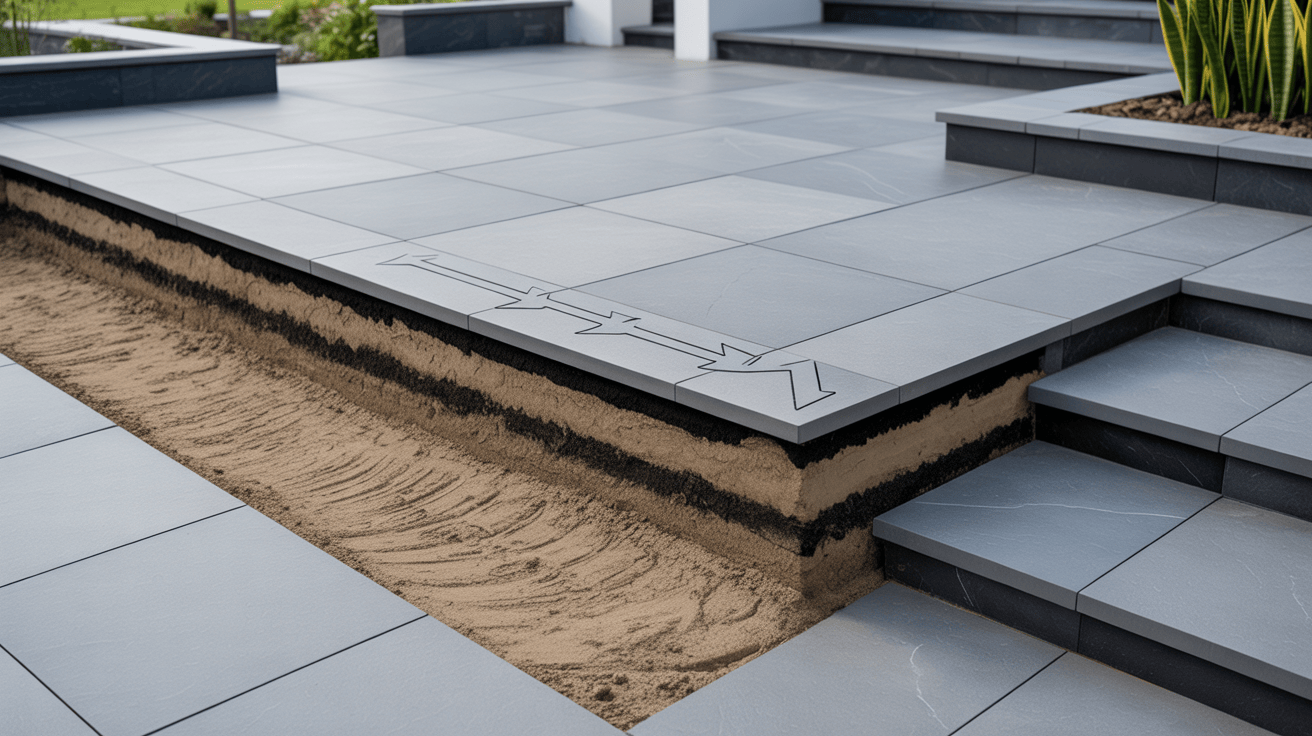
A patio is only as good as the foundation it sits on. While most homeowners focus on choosing the right slabs or porcelain tiles, the part you don’t see — the drainage system and sub-base, is what determines whether your patio lasts twenty years or begins to sink and crack within two.
If you’re planning a new patio in Brentwood, understanding the basics of proper drainage and foundation design will help you make an informed decision and ensure your installation stands the test of time.
Why Good Drainage Matters
Poor drainage is one of the most common causes of patio failure. Without somewhere for water to go, rain collects on the surface or seeps underneath, leading to movement, frost damage, and algae growth. A well-designed patio should:
-
Direct water away from your home
-
Prevent pooling or puddling
-
Allow natural run-off through joints or slight gradients
-
Protect the sub-base from becoming waterlogged
Professional installers plan this as part of the design, adjusting gradients, installing channels, or using permeable materials where needed.
What a Proper Patio Foundation Should Include
A long-lasting patio relies on a solid, well-compacted foundation. A typical high-quality installation includes:
1. Excavation to the correct depth
The ground must be dug out deep enough to allow for the sub-base, mortar, and final paving layer. Cutting corners here is why some patios move after a few winters.
2. A strong sub-base layer
Usually made of Type 1 MOT or Type 3 for better drainage. This provides stability and prevents sinking.
3. Compaction
A vibrating plate is used to compact each layer. Proper compaction is vital for longevity.
4. Full mortar or slurry bed
For porcelain and natural stone, a full mortar bed or slurry primer ensures every slab is supported and bonded correctly.
5. Correct levels and falls
Typically a fall of 1:60 is used to guide water away from the house and prevent standing water.
Permeable vs Impermeable Patio Surfaces
Different patio materials handle water differently.
-
Porcelain tiles are non-porous and require precise drainage planning.
-
Sandstone and natural stone can absorb small amounts of moisture but still need correct gradients.
-
Permeable block paving allows water to pass between the joints naturally.
Understanding the material helps your installer design the ideal drainage solution.
Signs of Poor Drainage in Existing Patios
If you already have a patio, you may spot early warning signs such as:
-
Puddles that sit for hours after rain
-
Green or slippery patches
-
Cracking or lifting slabs
-
Water running towards your property
These issues usually mean the foundation or gradient needs correcting.
Choose a Professional Installer for Peace of Mind
Patio drainage and foundation design is not something to guess. A professional installer will assess soil type, ground levels, access, and required fall before laying a single slab.
If you’re considering a new patio, take a look at our patio installations in Brentwood for high-quality workmanship and long-lasting results.