
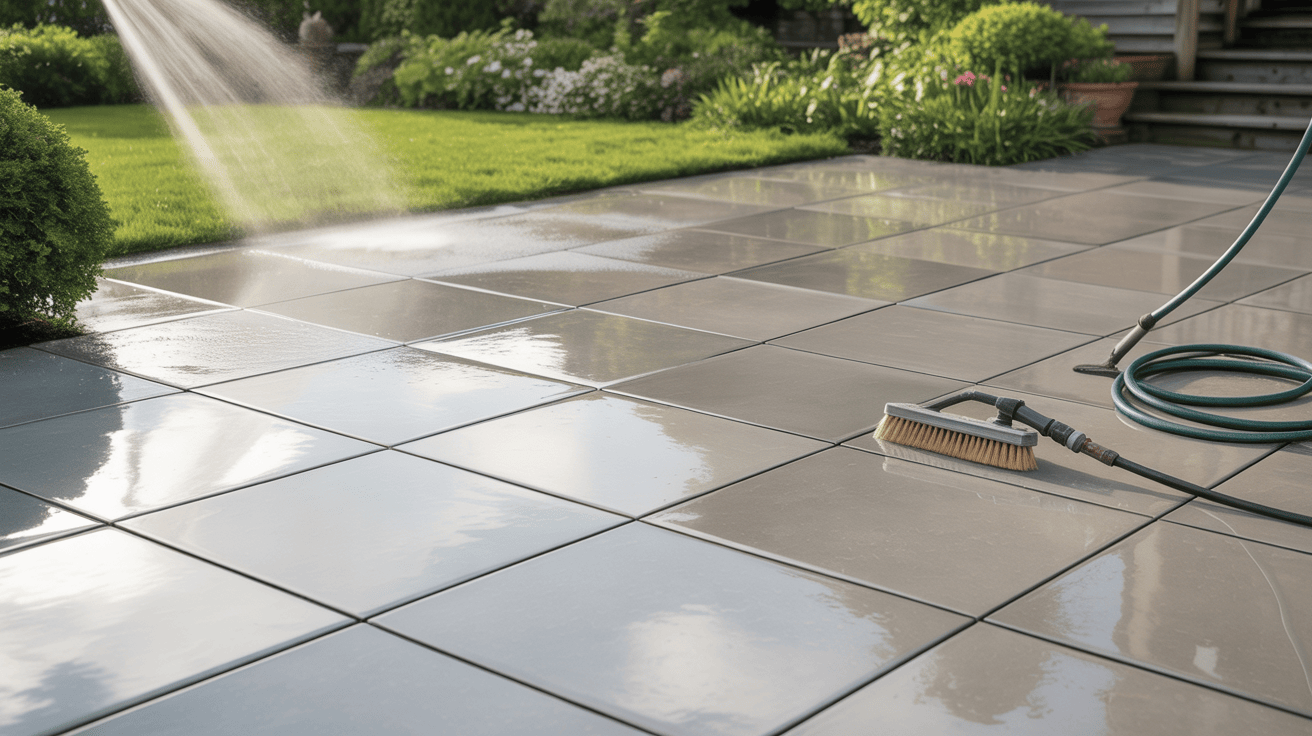
A well-installed patio is a long-term investment, but like any outdoor feature, it needs the right maintenance to stay looking its best. From everyday cleaning to winter protection, a little care goes a long way. Whether you have porcelain, sandstone, limestone, or block paving, these simple maintenance tips will help keep your patio fresh, clean, and durable for years to come.
Regular Cleaning Makes the Biggest Difference
Keeping your patio clean is the easiest way to extend its lifespan. A light sweep once or twice a week removes dirt, leaves, and debris before they cause staining. For deeper cleaning, warm soapy water and a stiff brush work well on most surfaces. Porcelain patios usually need minimal scrubbing thanks to their low-porosity finish, while natural stone may need gentler cleaning to avoid surface etching.
Safe Jet-Washing Techniques
Jet-washing is an effective way to revive a tired-looking patio, but it must be done correctly.
-
Keep the nozzle at least 12–18 inches from the surface
-
Avoid blasting directly into joints
-
Use a fan spray rather than a pencil jet
-
On sandstone or limestone, use the lowest pressure setting
Over-jet-washing can damage pointing, loosen slabs, or leave streaking, so gentle and controlled cleaning is always best.
Preventing and Treating Algae
Algae and moss thrive in shady areas or on patios that hold moisture. You can reduce growth by:
-
Improving airflow around the patio
-
Sweeping regularly
-
Keeping the surface dry where possible
-
Applying an algae and moss treatment once or twice a year
Porcelain patios resist algae better than porous stone, but all surfaces benefit from preventative care.
Sealing Your Patio for Long-Term Protection
Some patio materials, such as sandstone and concrete, benefit from sealing. A high-quality sealant protects against staining, weathering, and algae growth. Porcelain usually doesn’t need sealing, but sealing the grout or jointing compound can still help protect against dirt build-up. Reapply sealant every 2–3 years for best results.
Winter Care: Avoid Freeze–Thaw Damage
Cold months can take their toll on patios, especially natural stone. To avoid cracks and lifting:
-
Remove snow rather than letting it compact
-
Use non-corrosive, pet-safe de-icer (avoid rock salt)
-
Keep joints and edges free from trapped water
Checking pointing before winter is also a good way to protect your patio from frost damage.
When to Call a Professional
If you notice sinking slabs, poor drainage, loose pointing, or persistent algae growth, it may be time for expert help. Professional installers can inspect the foundations, repair problem areas, and ensure your patio continues to perform as it should.
For high-quality patio installation or repairs, explore our patios in Brentwood services.